

What is Locksport? Australia’s Growing Hobby Explained
Back to Guides & Blogs
Most people’s first reaction to locksport is something like: “Wait, that’s a thing?”
It is. And it’s bigger than you’d think.
Locksport is the hobby of picking, bypassing, and studying locks as a skill-based pursuit — not for any nefarious purpose, but for the same reason people do puzzles, play chess, or learn sleight of hand. It’s a challenge. It’s satisfying. And once you open your first lock with two bits of steel, you’re hooked.
It’s Older Than the Internet
People have been picking locks recreationally for as long as locks have existed. The modern locksport community as we know it started taking shape in the early 2000s, with forums and YouTube channels turning a niche skill into a genuinely global hobby.
Today, locksport has millions of participants worldwide. Channels like LockPickingLawyer have amassed enormous audiences — not because people are planning heists, but because watching someone methodically defeat a security device is genuinely compelling viewing. The community skews heavily towards curious, technical-minded people: engineers, security researchers, tradespeople, and everyday hobbyists who just like the puzzle of it.
The Australian Scene
Australia has a growing locksport community, and it’s been gaining momentum steadily over the last several years.
TOOOL Australia (The Open Organisation Of Lockpickers) is the local chapter of the world’s largest locksport organisation, with members across the country who meet up, share knowledge, and compete. Online, the r/lockpicking subreddit has a dedicated Australian contingent, and Facebook groups like Locksporters of Australia connect pickers from every state.
For a more real-time community, the Australasian Pickers Discord is where a lot of the day-to-day conversation happens — pick recommendations, lock advice, show-and-tell, and general locksport chat from pickers across Australia and New Zealand. It’s independent of TOOOL, but draws a lot of the same crowd and is genuinely active. If you want to ask questions, share your first open, or just lurk while you learn the ropes, it’s a great place to land. (You might even spot the Bare Bones account in there.)
The hobby suits Australians well — we’re a practical, DIY-minded bunch, and locksport rewards exactly that mindset. Understanding how your own locks work, knowing what’s actually secure and what’s security theatre, having a skill that crosses into legitimate professional territory — it appeals to the kind of person who wants to actually understand how things work, not just take them on faith.
What Do Locksporters Actually Do?
A few things, depending on what interests you:
Single Pin Picking (SPP) is the purest form — manipulating each pin inside a lock individually until the lock opens. It’s the technique that takes the most time to learn and gives the most satisfaction when it clicks (literally).
Raking is a faster, less precise technique that works well on lower-security locks. Great for beginners and speed enthusiasts.
Competitive picking happens at locksport meetups — who can open a lock fastest, who can defeat the hardest lock in the room. Some Australian pickers compete internationally.
Lock collecting is its own rabbit hole. Vintage locks, high-security cylinders, rare manufacturers — some people are as much into the hardware as the picking.
Security research is where locksport crosses into the professional world. Understanding vulnerabilities in locking mechanisms is genuinely valuable knowledge for locksmiths, security consultants, and facilities managers.
The Rules Everyone Agrees On
The locksport community self-polices strongly around two rules that every picker respects:
Never pick a lock you don’t own or don’t have permission to pick.
Never pick a lock that’s in use or that you rely on.
These aren’t just legal common sense — they’re the culture. The hobby depends on public trust, and the community takes that seriously. You’ll see these rules posted in every forum, every group, every beginner guide. Including this one.
Where Bare Bones Fits In
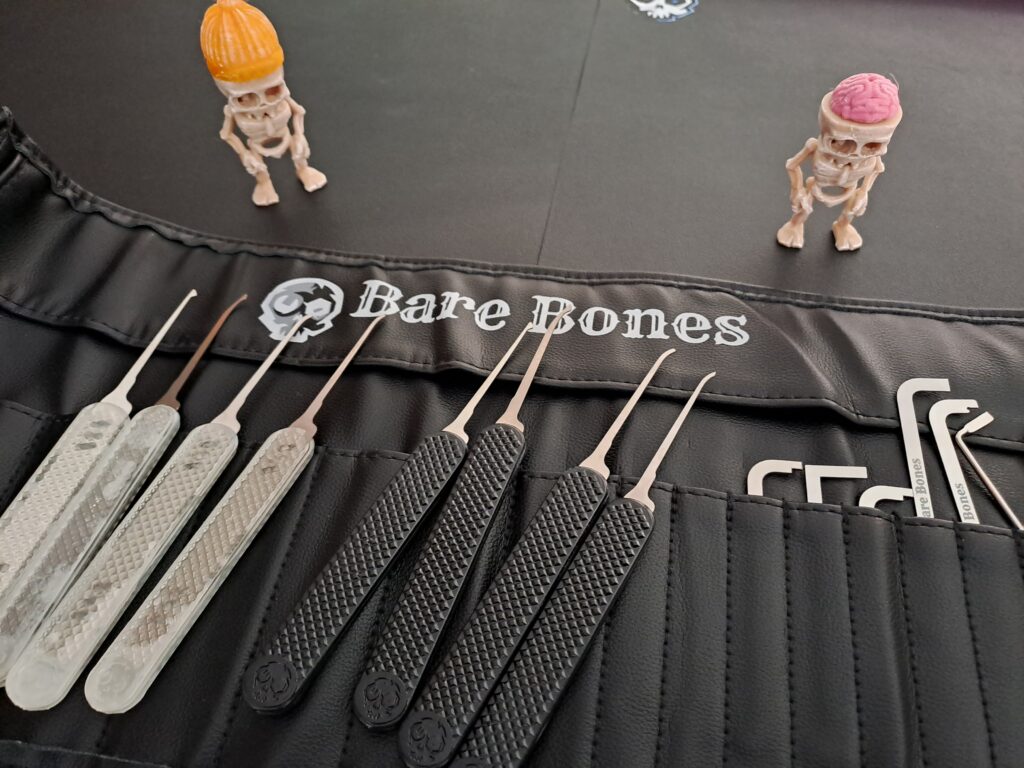
Bare Bones Lock Picking was built specifically for the Australian locksport community. Not an importer, not a reseller — an actual Australian manufacturer making picks from 301 stainless steel, designed around the locks Australians actually encounter: Lockwood cylinders, local padlocks, the keyways you find on Australian doors.
Being local means more than just fast shipping. It means the picks are specked for Australian conditions, there’s a local warranty, and when the community has questions or feedback, it goes directly back into how the products are developed.
If you’re new to locksport in Australia, the best place to start is the Bare Bones Beginner’s Guide — a plain-English rundown of lock types, pick types, thickness choices, and technique basics. From there, the Beginner Questions page covers the most common “which kit should I get?” decisions in detail.
The hobby is waiting. The locks aren’t going to pick themselves.