Bare Bones...

Category: Intermediate

Lock Picks for Locksmiths in Australia — What You Actually Need

Back to Guides & Blogs

You know how to pick a lock. You don’t need a tutorial. What you need is picks that hold up on the job, fit the locks you’re actually working on in Australia, and don’t require a currency conversion and a three-week wait every time you need to restock.

That’s what this is about.


The Problem With Your Current Options

Walk into a locksmith supplier in Australia and the pick selection is usually underwhelming — overpriced import sets of questionable steel, or cheap multi-piece kits that look impressive in the box and let you down on the third job.

The other option is ordering from overseas. You know how that goes: find a decent set, convert to AUD, add international shipping, wait two to four weeks, hope customs doesn’t sting you on arrival. For a hobbyist that’s annoying. For a professional restocking regularly, it’s a genuine operational headache.

There’s a better option now — and it’s made here.


What You Actually Need From a Pick Set

Your requirements aren’t the same as a weekend hobbyist. You’re working through multiple jobs a day, across a range of residential and commercial locks, under time pressure. Here’s what actually matters at that level:

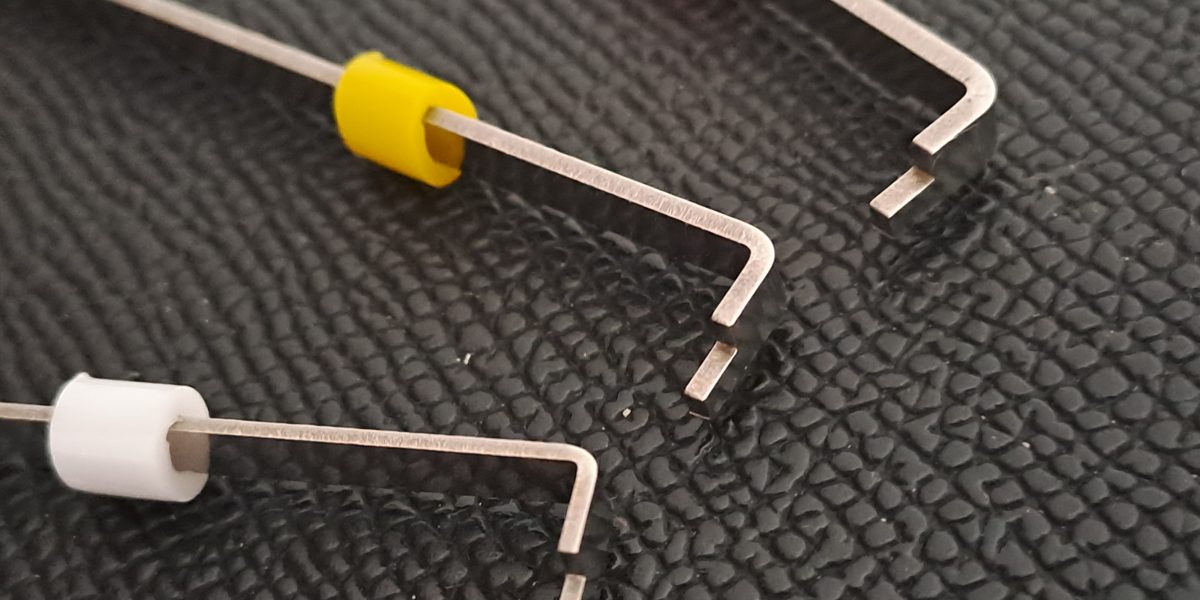
Steel that holds up under volume You need picks that don’t take a set — meaning they spring back true after repeated flexing, not develop a permanent bend after a week of daily use. Bare Bones picks are made from 301 high-yield stainless steel — the same spec used by professional-grade manufacturers globally. It’s strong, it’s flexible, and it lasts. If a supplier can’t tell you what steel their picks are made from, that’s your answer right there.

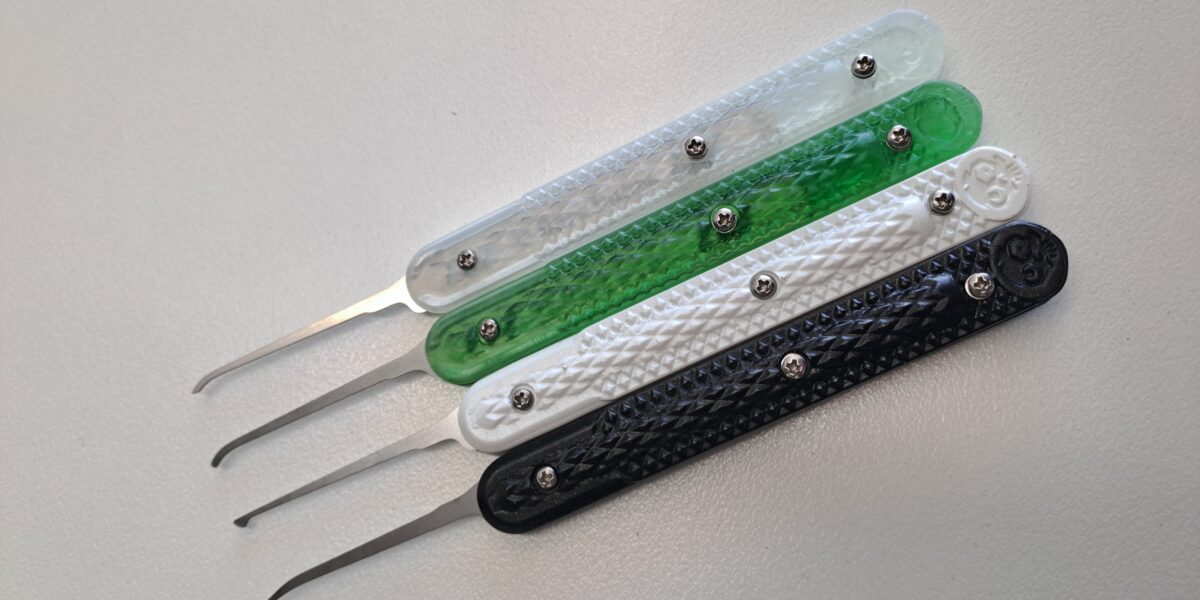
Full tang construction You need feedback. When you’re single pin picking a restricted cylinder under time pressure, you can’t afford a pick that deadens what the lock is telling you. Every Bare Bones pick is full tang through the handle — the steel runs the entire length, giving you direct, unfiltered feedback on every pin. No weak join at the base of the handle, no energy lost between the lock and your fingers.

The right thickness for the right lock This is where a lot of generic pick sets fall short — one thickness, one use case, not much else. As a locksmith in Australia, you’re going to encounter a range of keyways and you need picks to match:

  • 23thou is your everyday workhorse. Wide Australian keyways — Lockwood cylinders, standard residential pin tumblers — this is the thickness that fits cleanly, gives solid feedback, and gets the job done efficiently. Most of your day-to-day work lives here.
  • 20thou steps in when 23thou starts feeling cramped. Medium profile keyways, tighter residential cylinders, anything where you’re losing clearance and losing feel. You’ll reach for this more than you expect.
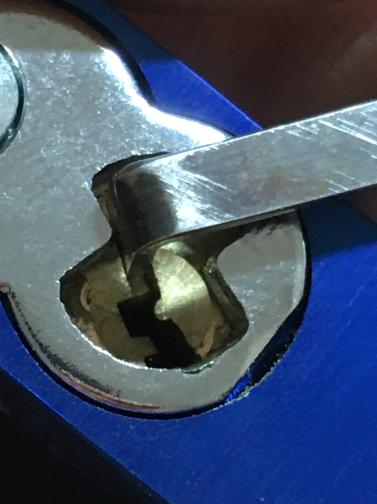
  • 15thou is for the jobs that need it — narrow European keyways, ABUS cylinders, high-security locks where getting the pick in cleanly without touching the keyway walls is the difference between picking the lock and fighting it. If you’re working on anything European-spec, 15thou isn’t optional.

Running all three thicknesses isn’t overcomplicating your kit — it’s having the right tool for the job, which is the whole point.


Local Supply. Actual Warranty. Fast Turnaround.

Some of the locksmiths who’ve made the switch to Bare Bones picked up a set out of curiosity — Australian-made, decent price, worth a try. What kept them coming back was simpler than the steel spec: when something needed sorting, there was an actual Australian business to deal with. No international return process, no email chain with a Canadian warehouse, no waiting on a replacement to clear customs.

Local warranty. Local support. Restocking that doesn’t require a spreadsheet to calculate the landed cost.


Building Your Professional Kit

If you’re putting together a proper working kit from the Bare Bones range, here’s how to think about it:

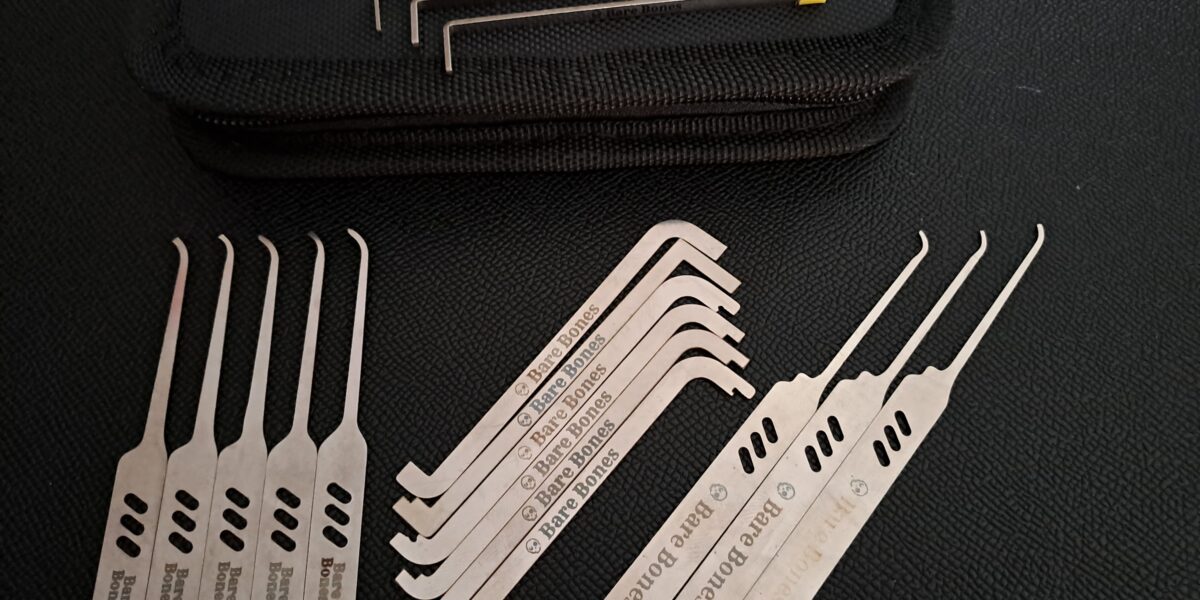
Start with 23thou hooks and rakes as your foundation — these cover the majority of Australian residential and light commercial work. Add 20thou for medium keyways and locks where you need a touch more clearance. Keep 15thou in the bag for European locks and anything high-security with a narrow keyway.

That’s three thicknesses, all in the same 301 stainless steel, all full tang, all made in Australia. A working kit that’s actually built around what you encounter on Australian jobs — not what’s common in North America or Europe.

Browse the full Bare Bones range →
Shop by thickness →
Get in touch directly →

How We Make Our Lock Picks — Australian Manufacturing at Bare Bones

Back to Guides & Blogs

Most lock pick brands don’t talk much about where their picks actually come from. There’s a reason for that — most of them don’t really know. They’re ordering from offshore suppliers, slapping a label on the packaging, and calling it done.

Bare Bones is different. And this is how it happened.


It Started With Frustration

Bare Bones didn’t start as a business. It started as a hobby — my hobby.

I got into lock picking the way most people do. Fell down a YouTube rabbit hole, got completely obsessed, and then started trying to actually buy decent picks here in Australia. That’s where it got frustrating fast. The options were either cheap import sets of questionable steel, or ordering directly from overseas — dealing with currency conversion, international shipping fees, multi-week wait times, and the customs lottery on arrival. For something I just wanted to mess around with at home, it felt ridiculous.

So I decided to make my own.

I didn’t set out to start a business. I set out to solve my own problem — get quality picks, built properly, without the overseas headache. But it turned out I wasn’t the only Australian picker who felt that way. Word got around. People started asking where they could get them. Orders came in. And what started as scratching my own itch quietly became Bare Bones Lock Picking.


The Steel Matters More Than You Think

Everything starts with the material, and on this point there’s no compromise at Bare Bones: 301 high-yield stainless steel, full stop.

This isn’t a marketing claim — it’s a practical one. Lock picks operate under real mechanical stress. Every time you apply tension to a lock and work a pick through a keyway, you’re flexing that steel repeatedly. Cheap picks — the kind often found in large budget import sets — are typically made from inferior alloys with a high iron content. They’re brittle. They take a set (meaning they bend and stay bent). They snap.

301 stainless steel has the combination of strength, flexibility, and corrosion resistance that the job demands. It’s the same spec used by professional-grade pick manufacturers worldwide, and it’s the minimum that makes a pick worth using long-term.

When you buy a Bare Bones pick, the steel spec is stated clearly. If you’re shopping elsewhere and the material isn’t disclosed — that’s your answer right there.


Full Tang. Every Time.

Every Bare Bones pick is full tang through the handle — meaning the steel runs the entire length of the pick, handle included. This matters for two reasons.

First, it’s structurally stronger. A pick that terminates at the base of the handle has a weak point right where stress concentrates during use. Full tang eliminates that.

Second, it means the pick and handle move as one unit, giving you direct, unfiltered feedback from the lock. When a pin sets, you feel it. That tactile feedback is everything in single pin picking — and a pick that deadens it through a poorly joined handle is a pick working against you.


Built for Australian Locks

This is the part that overseas manufacturers genuinely can’t replicate — the picks are designed with Australian keyways in mind.

The most common locks on Australian doors and padlocks — Lockwood cylinders, standard Australian pin tumblers — have specific keyway profiles. The thickness range Bare Bones stocks (15thou, 20thou, and 23thou) is built around what Australian pickers actually encounter, with 23thou as the recommended all-rounder for the wide keyways common in local hardware.

An overseas brand optimising for North American or European keyways is making picks for their market. Bare Bones is making picks for ours.


From Raw Steel to Finished Pick

The process starts with 301 stainless steel stock and ends with a finished pick ready to go into a kit or ship as a single. The profiles — hooks, rakes, deep hooks like the Three Bones collaboration series — are cut and finished to spec, inspected, and packaged in Australia.

The ‘plastic’ components — handles and cases — are made from DLP resin with a protective coating for long-term durability. Not cheap injection-moulded plastic, but material chosen specifically for longevity in everyday use.

There’s no offshore middleman in that chain. No mystery about what you’re getting or where it came from.


Why This Matters to You

You might be wondering why any of this is relevant to picking a lock. Fair question.

It matters because the pick is your only connection to what’s happening inside a lock. When you’re trying to feel a pin set at a shear line — a movement measured in fractions of a millimetre — the quality of the tool in your hand is the difference between feedback and silence. Between opening a lock and wondering why you’re not getting anywhere.

Good steel. Proper construction. Made for the locks you’re actually picking. That’s what Bare Bones is built on — and it’s what was missing from the Australian market when this whole thing started.

Browse the full Bare Bones range →
New to locksport? Start with the Beginner’s Guide →

The Complete Guide to Lock Pick Thicknesses — 15thou vs 20thou vs 23thou

Back to Guides & Blogs

If you’ve spent any time shopping for lock picks, you’ve hit the thickness question. The numbers are small — we’re talking thousandths of an inch — but the difference between them matters more than beginners expect.

Get it wrong and you’ll either be forcing picks into locks where they don’t belong, or swimming in a keyway so wide your pick is doing nothing useful. Get it right and everything just… works better.

Here’s a plain-English breakdown of each thickness, what it’s for, and which one you should actually start with in Australia.


First — What Is “Thou”?

“Thou” is short for thousandths of an inch. So 15thou = 0.015″, 20thou = 0.020″, 23thou = 0.023″. It refers to the thickness of the pick blade — the flat metal part that goes into the keyway.

Thicker picks are stiffer and stronger. Thinner picks are more flexible and fit narrower keyways. Neither is universally better — it depends entirely on the lock you’re picking.


The Thicknesses: What Each One Actually Does

23thou — The Australian All-Rounder

If you’re picking locks in Australia, 23thou is almost always the right starting point.

Why? Because Australian locks skew towards larger, more open keyways. The Lockwood C4 — one of the most common cylinders you’ll find on Australian doors — has a wide keyway that works perfectly with 23thou. It’s thick enough to give you solid feedback and control, but slim enough to navigate medium keyways without drama.

The other advantage of 23thou as a starting point: it covers the middle ground between wide and narrow, meaning you don’t immediately need a second set. One thickness, most Australian locks, sorted.

Best for: Lockwood cylinders, standard Australian padlocks, most door locks you’ll encounter day-to-day.

Browse Bare Bones 23thou picks →


20thou — The Step Down

20thou sits between 23thou and 15thou — thinner and more flexible, but still substantial enough to feel what’s happening inside the lock.

Once you’re comfortable with 23thou and want to start picking medium-profile keyways more precisely, 20thou becomes useful. It’s also where you start if you’re picking locks that 23thou feels tight in — the pick is just cramped in there and you’re losing feedback.

A lot of intermediate pickers run both 20thou and 23thou, choosing based on the specific lock in front of them. For Australian pickers, 20thou becomes relevant when you start exploring a wider variety of locks beyond the standard Lockwood-style cylinders.

Best for: Medium keyways, transitioning from beginner to intermediate, locks where 23thou feels slightly cramped.

Browse Bare Bones 20thou picks →


15thou — The Specialist

15thou is thin. Genuinely thin. It flexes noticeably and requires more finesse to control — which is exactly the point, because the locks it’s designed for demand it.

European locks — brands like ABUS, Mul-T-Lock, and other high-security cylinders — often have narrow, complex keyways that simply won’t accept a 23thou or 20thou pick without making contact with the keyway walls constantly. That contact kills your feedback and makes single pin picking nearly impossible.

15thou cuts through narrow keyways cleanly and lets you feel what’s actually happening with the pins rather than wrestling with the keyway itself.

For Australian beginners, 15thou is not your starting point. But once you’ve got the fundamentals and you start hunting for more challenging locks — particularly anything European — you’ll want it in the kit.

Best for: Narrow European keyways (ABUS, Mul-T-Lock), high-security cylinders, advanced picking where keyway clearance matters.

Browse Bare Bones 15thou picks →


Quick Reference: Which Thickness for Which Lock?

Lock Type Recommended Thickness
Lockwood C4 (common Australian door lock) 23thou
Standard Australian padlocks 23thou
Medium keyway cylinders 20thou or 23thou
European locks (ABUS etc.) 15thou
High-security narrow keyways 15thou
Mixed collection — want one thickness 23thou

What About 25thou?

You’ll sometimes see 25thou (0.025″) mentioned — it’s a popular thickness with North American brands like Sparrows because it suits North American keyways well. For Australian picking, it’s less universally useful. Our common locks tend to suit 23thou better as the baseline, and 25thou can feel unnecessarily chunky in anything other than the widest keyways.

It’s not useless — but if you’re building an Australian kit from scratch, start with 23thou before considering 25thou.


The Honest Beginner Advice

Don’t buy one of everything. It’s tempting, but you’ll just confuse yourself.

Start with 23thou — hooks and rakes. Pick Australian locks until you can open them reliably. Once you know what you’re doing and you start hitting the limits of what 23thou can get into, that’s when 20thou and 15thou start making sense.

All three thicknesses are available in the Bare Bones shop, made from 301 high-yield stainless steel, and stocked in kits so you don’t have to piece together a set from scratch.

Still not sure which to start with? The Beginner Questions page covers this exact decision in detail — including which kits include which thicknesses and why.

Browse all Bare Bones picks by thickness →

Lock Picks in Australia — Why Buy Local vs Importing from Overseas

Back to Guides & Blogs

If you’ve spent more than five minutes researching lock picks online, you’ve probably landed on an overseas site. Sparrows out of Canada. SouthOrd from the US. Prices look reasonable — until you actually do the maths.

Here’s an honest breakdown of what buying local actually means for Australian locksport enthusiasts, with real numbers.


The Import Reality Check

Let’s use the Sparrows Tuxedo Set as the example — it’s one of the most commonly recommended beginner kits online, and for good reason. It’s a solid set.

Here’s what it actually costs an Australian to get it:

Cost Amount
Sparrows Tuxedo Set (USD) USD $32.00
International shipping to Australia (USD) ~USD $15.00
Subtotal in USD ~USD $47.00
Converted to AUD (at ~0.70 exchange rate) ~AUD $67.00
Potential customs/import duties ???
Wait time 2–4 weeks

And that customs question mark is the one that keeps people up at night. Australia’s low-value threshold means small parcels often slip through — but sometimes they don’t. If you get hit, you’re looking at GST on top of everything else, with no way to predict it at checkout.

So that “cheap” overseas kit suddenly isn’t so cheap.


What the Same Money Gets You Locally

At Bare Bones Lock Picking, a comparable beginner kit starts from AUD $67 — manufactured right here in Australia, in AUD, shipped from Australia.

No conversion rate to check. No international shipping fees. No customs lottery. No 3-week wait.

The picks are made from 301 high-yield stainless steel — the same spec used by professional-grade manufacturers. Full tang through the handle. Built to last.


The Five Real Reasons to Buy Australian

1. AUD pricing — what you see is what you pay
No surprise conversions at checkout. The price on the site is the price you pay, in your currency, with Australian GST already factored in.

2. Shipping that actually makes sense
Local orders ship fast. We’re talking days, not weeks. If you’re keen to start picking, waiting a month for an overseas parcel is genuinely frustrating — especially when you’re a beginner who just wants to get into it.

3. No import fees or customs surprises
Australian-to-Australian is simple. There’s no threshold to worry about, no import declaration, no getting slugged with unexpected charges after the fact.

4. Local warranty
If something goes wrong with your picks — a tip snaps, something’s not right — you’re dealing with an Australian business that can actually sort it out without the headache of international returns. Bare Bones has a warranty and stands behind every pick they make.

5. You’re supporting Australian manufacturing
Bare Bones picks aren’t imported and relabelled. They’re designed and manufactured in Australia. When you buy local, you’re putting money back into a small Aussie business, not into an international supply chain.


“But I’ve Heard Overseas Brands Are Better Quality”

Honestly? It depends what you’re comparing. High-end overseas brands like Multipick make exceptional picks — but they’re also priced that way, and a beginner doesn’t need a $150 set to learn the basics.

For entry-level to mid-range picking, Australian-made picks at Australian prices make more sense. Once you’ve got the fundamentals down and you know exactly what you want from a pick, that’s when it’s worth exploring specialist international options — if you still feel the need.

Most people find they don’t.


The Bottom Line

Imported picks aren’t bad. But when you factor in currency conversion, international shipping, potential customs charges, and multi-week wait times, the real cost is almost always higher than the headline price suggests.

Local picks — same material spec or higher in some cases, made here, shipped fast, priced in AUD — are a smarter starting point for any Australian getting into locksport.

Browse the Bare Bones kit range →
Got questions before you buy? Check the Beginner Questions page →

Scroll to top