
Bare Bones...

Month: August 2026

What Is a Cutaway Training Lock (And Do You Need One)?

Back to Guides & Blogs

Short answer: A cutaway training lock is a real pin tumbler lock with part of the housing cut away so you can see the pins, springs, and shear line while you pick it. Instead of guessing what’s happening inside a sealed lock, you can watch each pin lift, bind, and set in real time, which makes it one of the fastest ways to actually understand lock picking rather than just memorising motions. If you’re serious about learning properly (rather than getting lucky with a rake), a cutaway lock is one of the best purchases you can make.


What Makes a Cutaway Lock Different from a Normal Training Lock?

Any lock can technically be a “training lock” if you have permission to pick it, but a cutaway takes it further by physically removing part of the housing (usually a side panel) so the internals are visible. You can see:

  • Each pin stack (key pin, driver pin, spring) sitting in its chamber
  • Which pins are binding under tension at any moment
  • The exact shear line and how far a pin needs to travel to set
  • What “overset” looks like when you apply too much tension and push a pin past the shear line

This turns picking from a purely blind, feel-based skill into something you can watch and correlate with what you’re feeling through the pick and tension tool, which shortens the learning curve significantly.


Do You Actually Need One?

You don’t need one to learn to pick locks. Plenty of pickers learn on sealed practice locks. But a cutaway solves the single biggest problem beginners have: not knowing whether what they’re feeling matches what’s actually happening inside the lock. Watching a pin set as you feel it set is a genuinely different (and faster) way to learn than feel alone.

A cutaway is especially worth it if:

  • You’re new and want to understand binding order and feedback properly, not just get lucky with raking
  • You’re troubleshooting a specific technique that isn’t working and want to see why
  • You want to understand security pins (spools, serrated) by watching false sets happen visually

It’s less essential if: you’re an experienced picker who already has a strong feel for binding order and just wants more practice locks and profiles to work through.


What to Look for in a Cutaway Training Lock

  • Standard pin tumbler mechanism, so what you learn transfers directly to real-world locks, not a novelty mechanism
  • Clear view of the shear line. The cutaway needs to actually show the part that matters, not just the outside of the cylinder
  • Adjustable or replaceable pins, ideally, so you can progress from standard pins to security pins (spools, serrated) as you improve

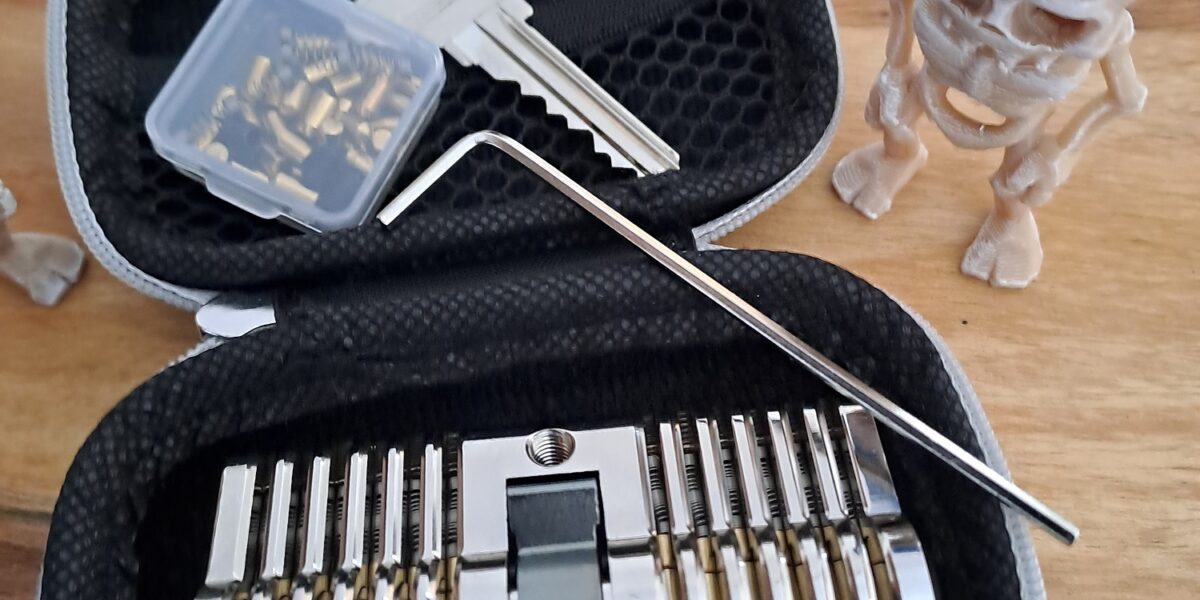
The Bare Bones Pin Tumbler Cutaway Training Lock is built around exactly this: a genuine pin tumbler mechanism with the housing cut away so you can watch pins bind and set while you practise, and a keyway suited to Australian-style thicknesses. For a European-style keyway, the Scandinavian Oval 7-Pin Training Lock is a good complement, since it lets you practise narrower keyways with 15thou picks.


Getting the Most Out of a Cutaway Lock

  1. Start by applying tension and simply watching what happens without trying to pick anything. Get a feel for how much a pin needs to move to bind.
  2. Practise single pin picking first, watching each pin set as you feel it. Don’t rake yet.
  3. Once you’re consistent, try deliberately oversetting a pin (too much tension) so you can see and feel what that mistake looks like.
  4. Once fundamentals feel solid, move to raking on the same lock and watch how multiple pins respond to the raking motion at once.

Browse Bare Bones training locks and picks →


Frequently Asked Questions

Is a cutaway lock the same as a practice lock?

Not quite. Any lock you have permission to pick can be a “practice lock,” but a cutaway specifically has part of its housing removed so you can see the pins and shear line while picking, rather than working entirely blind.

Will skills learned on a cutaway lock transfer to real locks?

Yes, provided the cutaway uses a genuine pin tumbler mechanism (as opposed to a novelty or simplified mechanism). Binding order, tension feel, and pin behaviour are the same principles at work in both.

What’s the difference between overset and binding?

Binding is when a pin is under pressure from tension and hasn’t yet reached the shear line, the point you’re aiming for. Overset is when too much tension pushes a pin past the shear line, which can prevent the lock from opening even though the pin has technically “moved enough.” A cutaway lock lets you see this happen instead of just feeling a confusing result.

Do I need a cutaway lock if I’m already an experienced picker?

Not essential, but still useful, particularly for troubleshooting a specific technique that isn’t working, or for visually understanding security pin behaviour (spools, serrated pins) if you’re moving into more advanced locks.

What keyway thickness should I use with a cutaway training lock?

It depends on the lock. Bare Bones’ Pin Tumbler Cutaway Training Lock suits standard Australian thicknesses (23thou), while the Scandinavian Oval training lock is suited to narrower European-style keyways using 15thou picks. Our thickness guide covers this in detail.
What Is a Tension Tool (Tension Wrench) and How Do You Use One?

Back to Guides & Blogs

Short answer: A tension tool (also called a tension wrench) is a small, flat or angled tool inserted into the keyway to apply light rotational pressure on the lock’s plug while you pick the pins. It doesn’t touch the pins at all. Its only job is to hold that light turning pressure so pins stay set once you lift them into place. Without tension, single pin picking and raking simply don’t work.


What Does a Tension Tool Actually Do?

A pin tumbler lock opens when every pin is pushed to exactly the shear line, the gap between the plug (the part that turns) and the housing around it. Left alone, spring pressure pushes pins back down. Applying light tension to the plug means that as each pin reaches the shear line, it catches slightly on the edge of the plug and stays set, instead of springing back.

Too much tension and the pins bind too hard to move or feel. Too little and set pins fall back down before you finish the rest. Tension is often described as the hardest skill in lock picking to learn, more so than pick handling itself, because it’s almost entirely feel, not sight.


Types of Tension Tools

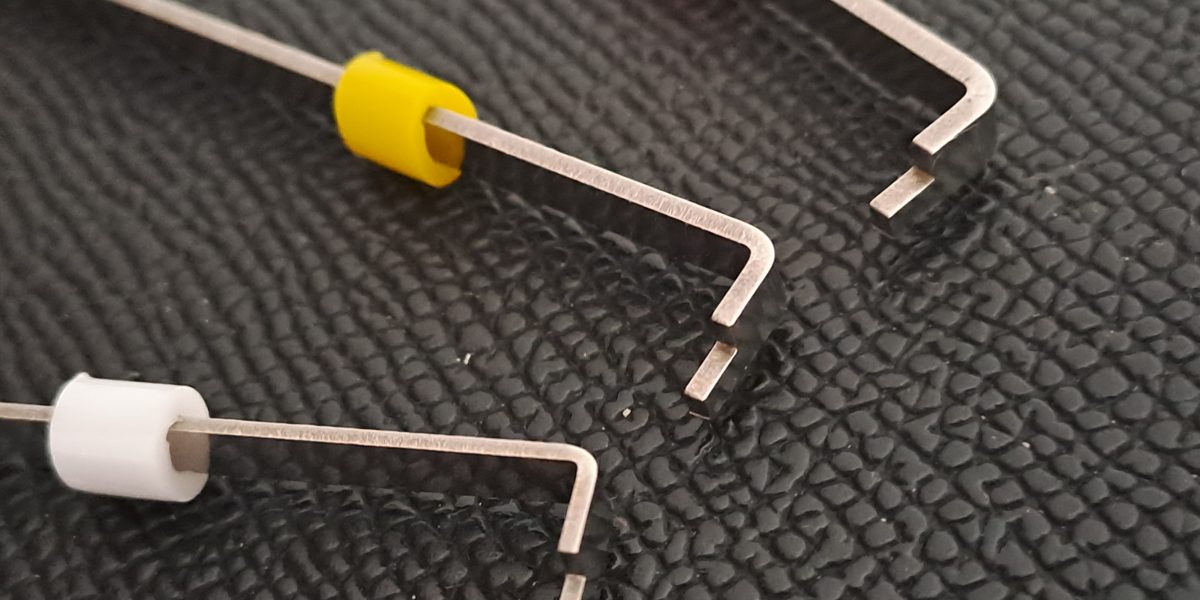
Bottom-of-Keyway (BOK) Tools

Inserted at the bottom of the keyway, on the opposite side of the plug from the pins. BOK is the more common default overall, and it’s generally the better choice for raking specifically, since it sits clear of the top of the keyway where a rake needs to move freely. The trade-off is that it takes up more physical space in the keyway, which can matter on tight or heavily warded profiles.

Top-of-Keyway (TOK) Tools

Inserted at the top of the keyway, in front of the pins. TOK leaves the most working room in the keyway since it doesn’t sit in the path a pick would normally travel, which some pickers prefer for hooks and single pin picking on tighter keyways. The trade-off is that a TOK tool can get knocked or bumped out during vigorous raking, since it sits closer to where the raking motion happens.

Rigid vs Flexible

Rigid tension tools give more direct, precise feedback and are generally preferred for single pin picking. Flexible or spring-style tension tools (sometimes built into a “feral” style set) can make it easier to hold consistent light pressure without overcorrecting, which some beginners find more forgiving while they’re learning the feel.

None of this is a hard rule; a lot of it comes down to individual preference and the specific keyway you’re working with. Most experienced pickers end up comfortable with both BOK and TOK and choose whichever suits the lock in front of them.


How to Use a Tension Tool: The Basics

  1. Insert the tension tool into the keyway (bottom or top, depending on your tool and the lock), leaving room for your pick.
  2. Apply very light rotational pressure in the direction the lock would normally turn to open.
  3. Keep that pressure steady while you work each pin with your hook or rake.
  4. As pins set, you’ll feel the plug rotate slightly with each one. That’s your feedback that you’re on the right track.
  5. If everything binds and nothing moves, you’re using too much tension. If pins keep falling back down, you’re using too little.

This is a genuinely hard skill to describe in words. It’s worth spending real time on a training/cutaway lock specifically to build the feel, rather than jumping straight to picking a real door lock.

Browse the Bare Bones ‘Feral’ Tension Set, 3 sizes →


Common Beginner Mistakes

  • Too much tension: the plug feels locked solid and no pins seem to move at all
  • Inconsistent tension: easing off between pins lets already-set pins fall back down, undoing progress
  • Wrong tool for the keyway: a BOK tool that’s too wide can interfere with pick movement in narrow keyways; switching to a TOK tool or thinner tension tool often solves this

Frequently Asked Questions

What is the difference between BOK and TOK tension tools?

BOK (bottom of keyway) tools sit on the opposite side of the plug from the pins and are generally preferred for raking, since they stay clear of the raking motion. TOK (top of keyway) tools sit in front of the pins, leaving more open working space, which some pickers prefer for hooks on tighter keyways, though they can get knocked loose during vigorous raking.

How much tension should I apply when picking a lock?

As light as possible while still holding set pins in place. There’s no fixed amount, since it varies by lock. Most beginners start with too much tension; if the plug feels completely locked and unresponsive, ease off.

Can I pick a lock without a tension tool?

No, not with standard single pin picking or raking techniques. Tension is what holds pins in place once they’re set. Without it, pins simply spring back down and the lock won’t open.

Do I need different tension tools for different locks?

Often, yes. Keyway width and shape vary between lock brands and types, so having a few different tension tool widths and styles (like a multi-size set) covers more locks than a single tool.

Is a rigid or flexible tension tool better for beginners?

Both work, and it comes down to preference. Rigid tools give more direct feedback, which some beginners find clearer, while flexible or spring-style tools can be more forgiving of small variations in applied pressure while learning the feel.

301 Stainless Steel vs Titanium Lock Picks: Which Material Should You Choose?

Back to Guides & Blogs

Short answer: 301 high-yield stainless steel and titanium are both used for lock picks, but they suit different priorities. 301 stainless offers a stiffer, more direct feel for pin feedback, resists corrosion well, and costs significantly less, which is why it’s the standard choice for most locksport hobbyists and why Bare Bones builds every pick around it. Titanium is lighter and more flexible, which some pickers prefer for very fine work, but it’s more expensive, less rigid (meaning less direct feedback), and offers no real corrosion advantage over quality stainless for typical use.


What Makes a Good Lock Pick Material?

Three things matter most in a pick blade: stiffness (how much the blade flexes under tension), feedback (how clearly you feel pin movement through the handle), and durability (resistance to bending, snapping, and corrosion over years of use). The material has to balance all three. Too flexible and you lose feedback. Too brittle and picks snap under tension. Poor corrosion resistance and your kit degrades with sweat and humidity over time.


301 High Yield Stainless Steel

301 stainless is a specific stainless steel alloy prized in spring and precision tool applications for its high yield strength, meaning it resists permanent bending under load better than standard steels, then returns to shape. For lock picks, that translates directly into control: the blade stays rigid enough to transmit exactly what’s happening at the pins, rather than absorbing the movement in flex.

Advantages:

  • Stiffer feel, with clearer feedback on pin binding order and set
  • High yield strength, resisting permanent bending and holding its profile over years of use
  • Excellent corrosion resistance for the cost
  • Significantly less expensive to manufacture, which keeps kits affordable

Trade-offs: being stiffer, 301 stainless is less forgiving if you’re using a lot of aggressive, high-flex raking technique, though for the vast majority of picking (SPP and standard raking) this isn’t a practical issue.


Titanium

Titanium is lighter and more elastic than most stainless alloys, meaning it flexes more before yielding. Some pickers who favour very light-touch, high-flex raking prefer this. It’s also popular in premium and novelty pick sets because of its weight and finish.

Advantages:

  • Lighter in the hand
  • More flex, which some raking styles benefit from
  • Doesn’t corrode (though quality stainless doesn’t meaningfully either, for this application)

Trade-offs:

  • More flex means less direct feedback for single pin picking, the technique most beginners should build first
  • Substantially more expensive to manufacture, which shows up in retail price
  • Titanium picks can feel “mushy” under tension to pickers used to a stiffer blade

Quick Comparison

301 Stainless Steel Titanium
Stiffness / feedback High: direct pin feedback Lower: more flex, less direct
Weight Standard Lighter
Corrosion resistance Excellent Excellent
Cost Lower Significantly higher
Best for SPP, standard raking, most locksport use Light-touch raking, novelty/premium sets

Why Bare Bones Builds Every Pick from 301 Stainless

We use 301 high-yield stainless steel, full tang through the handle, on every Bare Bones pick. That choice comes down to what actually improves picking outcomes for the vast majority of pickers: stiffness for clear feedback, durability that holds up over years of practice, and a price point that doesn’t punish you for building out a full kit of thicknesses and profiles.

If you’re deciding between materials as a beginner or intermediate picker, stainless is the better starting point almost every time. Titanium is a preference some experienced pickers develop for specific techniques, not a beginner requirement.

Browse Bare Bones 301 stainless steel picks →


Frequently Asked Questions

Is titanium better than stainless steel for lock picks?

Not universally. It depends on technique and preference. Titanium offers more flex and less weight, which suits some advanced raking styles, but stainless steel’s stiffness gives clearer feedback for single pin picking, which is the foundational skill most pickers should build first.

Why are titanium lock picks more expensive?

Titanium is more costly to source and machine than stainless steel, and the manufacturing process for precision pick blades in titanium is more involved, which is reflected in retail pricing.

Do stainless steel lock picks rust?

Quality stainless steel, including 301 high-yield stainless, has excellent corrosion resistance for normal use and storage. It’s not “rustproof” in extreme conditions, but for typical locksport use and storage, corrosion isn’t a practical concern.

What material do most professional locksmiths use?

Stainless steel is the most common material in professional and hobbyist lock picks, largely because of its balance of stiffness, durability, and cost. Titanium and other alloys exist in the market but represent a smaller share, generally aimed at specific techniques or premium positioning.

Can I mix titanium and stainless picks in the same kit?

Yes. Many pickers build kits with a mix of materials and thicknesses to suit different locks and techniques. There’s no compatibility issue. It comes down to personal preference for feel.

Is Lock Picking Legal in Australia? A State-by-State Guide

Back to Guides & Blogs

Short answer: Owning and practising with lock picks is not illegal anywhere in Australia. What’s regulated is possession without a lawful excuse. Every state and territory has an offence covering “housebreaking implements” (which lock picks fall under), and the deciding factor is almost always whether you can show a legitimate reason for having them, not the tools themselves. Locksport hobbyists, collectors, and people who practise at home on their own locks and training locks are not the target of these laws. They exist to stop people carrying break-in tools with criminal intent.

This guide breaks down the actual legislation, state by state, so you know exactly where you stand.

Disclaimer: this is general information, not legal advice. Laws change and individual circumstances matter, so if you’re facing an actual charge or have a specific concern, speak to a qualified criminal lawyer in your state or territory.


Why “Lawful Excuse” Is the Real Question

Almost every state and territory offence in this area is built the same way: it’s illegal to possess a “housebreaking implement” (a category that includes picklocks, jack bits, and similar tools) without a lawful excuse. In most jurisdictions, the burden shifts to the accused to show that excuse once possession is established.

A “lawful excuse” isn’t limited to being a licensed locksmith. Being enrolled in locksport, competing in a lock picking competition, practising at home on your own training locks, or having a documented hobby interest have all been accepted in Australian and New Zealand cases. What generally isn’t accepted is carrying picks in public with no explanation, especially at night or near a property you don’t have a connection to.

In short: keep your picks and practice locks at home, don’t carry them in public without a reason, and you’re on very solid ground.


State-by-State Quick Reference

State/Territory Legislation Maximum Penalty
New South Wales Crimes Act 1900 (NSW) s114(1)(b) 2 years (Local Court) / 7 years (District Court)
Victoria Summary Offences Act 1966 (Vic) s49D 2 years imprisonment
Queensland Criminal Code (Qld) s425 3 years imprisonment
Western Australia Criminal Code Act Compilation Act 1913 (WA) s407 3 years imprisonment
South Australia Summary Offences Act 1953 (SA) s21C(1) $2,500 fine or 6 months imprisonment
Tasmania Police Offences Act 1935 (Tas) s7B 50 penalty units or 2 years imprisonment
ACT Criminal Code 2002 (ACT) s315 (“Going equipped for theft etc”) Varies, see below
Northern Territory Summary Offences Act (NT) s57(1)(e) $1,000 and/or 6 months (12 months for a repeat offence)

The Detail, State by State

New South Wales

Under s114(1)(b) of the Crimes Act 1900 (NSW), it’s an offence to possess, without lawful excuse, “any implement of housebreaking or safebreaking.” This is a strict liability offence: the Crown only has to prove you possessed an implement capable of being used for housebreaking, not that you intended to use it that way. Once that’s established, the onus shifts to you to prove a lawful excuse.

Victoria

Section 49D of the Summary Offences Act 1966 (Vic) makes it an offence to have an “implement of housebreaking” in your custody or possession without lawful excuse, carrying up to 2 years imprisonment. As in NSW, the accused bears the burden of proving lawful excuse once possession is shown.

Queensland

Section 425 of the Criminal Code (Qld) covers being found in possession, by night, of an instrument of housebreaking without lawful excuse (or by day, with intent to commit an indictable offence). Maximum penalty is 3 years imprisonment.

Western Australia

Section 407 of the Criminal Code Act Compilation Act 1913 (WA), within the housebreaking chapter, covers possession of an implement of housebreaking or safebreaking without lawful excuse, with penalties depending on the circumstances of the offence.

South Australia

Section 21C(1) of the Summary Offences Act 1953 (SA) makes it an offence, without lawful excuse, to possess a housebreaking implement, defined to include a picklock key, crowbar, jack, bit, or similar. Maximum penalty is $2,500 or 6 months imprisonment.

Tasmania

Section 7B of the Police Offences Act 1935 (Tas) makes it an offence to possess, without lawful excuse, “any implement or instrument with intent to commit a crime or an offence.” That’s broader wording than some other states, but the same underlying principle applies: intent and lawful excuse are what matter, not simply owning the tools.

Australian Capital Territory

The ACT doesn’t use “housebreaking implement” language. Instead, s315 of the Criminal Code 2002 (ACT) covers “going equipped for theft,” which captures possession of items for use in connection with theft or related offences. The practical effect is similar: context and intent are what turn possession into an offence.

Northern Territory

Section 57(1)(e) of the Summary Offences Act (NT) covers possession of a “picklock, key, crow, jack, bit, or other implement of housebreaking” without lawful excuse. The maximum penalty is a $1,000 fine and/or 6 months imprisonment (12 months for a second or subsequent offence), and the implement can be forfeited on conviction.


What Actually Counts as a Lawful Excuse?

Courts look at context, not just the tools. Factors that have supported a lawful excuse in Australian cases include:

  • Owning the tools for a documented hobby (locksport) and practising on your own locks or training locks
  • Membership in a locksport club or entry in a lock picking competition
  • Professional use: locksmiths, tradespeople, and in at least one Australian case, a paramedic who had a documented history of using picks for the trade and as a hobby
  • Keeping tools at home rather than carrying them in public without reason

What tends to work against you: carrying picks in public late at night with no explanation, being found with picks near a property you have no connection to, or possessing them alongside other suspicious items (disguises, forced-entry tools not consistent with a stated purpose).


Practical Advice for Australian Locksport Hobbyists

  • Practise at home. Keep your picks and training locks where you live. This is the single lowest-risk approach.
  • Don’t carry picks in public without reason. If you’re heading to a locksport meetup or competition, that’s a reasonable excuse to have them on you. Heading out with no clear purpose isn’t.
  • Only pick locks you own or have explicit permission to pick. This isn’t just about the housebreaking implement offence. Picking someone else’s lock without permission raises separate trespass and property offences entirely.
  • Keep some form of evidence of your hobby: competition entries, club membership, purchase receipts from a supplier like Bare Bones, in case you’re ever asked to explain possession.

New to locksport? Start with our beginner’s guide →


Frequently Asked Questions

Is it illegal to buy lock picks in Australia?

No. Purchasing lock picking tools is legal in every Australian state and territory. The laws in this area concern possession without a lawful excuse, not purchase.

Can I pick the lock on my own front door?

Yes. You’re entitled to pick a lock you own. In practice, picking your own lock can risk damaging it, and depending on the situation, it may draw attention from neighbours or passers-by who don’t know it’s your property.

Do I need a licence to own lock picks in Australia?

No general licence is required to own lock picks for personal or hobby use in any Australian state or territory. Licensing requirements exist for locksmiths operating commercially, which is a separate matter from personal possession.

What happens if I’m found with lock picks in public?

It depends on the circumstances. Police can question you, and in most states the onus is on you to demonstrate a lawful excuse for possession. Having a documented hobby, heading to or from a locksport event, or another clear, honest explanation generally supports a lawful excuse.

Are the laws the same in every Australian state?

The underlying principle is consistent nationally (possession without lawful excuse is the offence, not ownership itself), but the specific legislation, wording, and maximum penalties vary by state and territory. See the state-by-state table above for the specific law in your jurisdiction.

Is locksport a recognised legitimate hobby in Australia?

Yes. Locksport is a growing, legal hobby in Australia with active clubs and competitions. It has been accepted as a lawful excuse for possessing lock picking tools in Australian legal contexts.

Rake Picks vs Hook Picks: What’s the Difference (And Which Should You Use)?

Back to Guides & Blogs

Short answer: Hook picks are used for single pin picking (SPP), setting each pin individually with precision and control. Rake picks are used for raking, a faster technique that manipulates multiple pins at once by moving the pick in and out of the keyway under tension. Most pickers carry both. Hooks give you control and teach you how locks actually work; rakes give you speed once you understand the fundamentals.

Here’s the full breakdown of what each one is, how they’re used, and which to reach for first.


What Is a Hook Pick?

A hook pick has a single raised tip (the “hook”) shaped to catch and lift one pin at a time. You apply light tension to the plug with a tension tool, then use the hook to find the binding pin (the one under the most pressure), lift it to the shear line, and feel it set. Repeat pin by pin until the lock opens.

This is single pin picking (SPP). It’s slower than raking, but it works on almost any pin tumbler lock, teaches you what’s actually happening inside the cylinder, and tends to be more reliable on higher-security or heavily-used locks where raking struggles.

Best for: learning the fundamentals, security pins (spools, serrated, mushroom), higher-security cylinders, precision work.


What Is a Rake Pick?

A rake pick has a wavy or zig-zag profile along the blade instead of a single tip. Instead of isolating one pin, you apply light tension and move the rake in and out of the keyway (or bounce/scrub it), bumping multiple pins at once in the hope that enough of them set to open the lock.

This is raking. It’s faster and requires less finesse than SPP, which makes it a satisfying technique for beginners and a fast option for standard pin tumbler locks without much security hardware inside. It’s generally less effective on locks with security pins, where the false sets it causes make SPP the more reliable choice.

Best for: speed, standard/basic pin tumbler locks, beginners building early wins and motivation.


Hook vs Rake: Quick Comparison

Hook Pick Rake Pick
Technique Single pin picking (SPP) Raking
Speed Slower Faster
Skill curve Steeper (teaches lock mechanics) Gentler (quicker early wins)
Best against security pins Yes No, often causes false sets
Best against standard locks Yes Yes
Feedback while picking High, you feel each pin Lower, less pin-by-pin control

Which Should You Start With?

Start with a hook. It’s slower to get your first open, but it teaches you how pin tumbler locks actually behave: binding order, feedback, and tension control, all of which make you better at raking later too. Once you’ve opened a few locks with a hook, add a rake to your kit for speed on easier locks.

Most Bare Bones kits include both hooks and rakes for exactly this reason. You’re not choosing one over the other long-term, just deciding where to start.

Browse Bare Bones hooks and rakes →


Frequently Asked Questions

Can a rake pick open any lock a hook pick can?

No. Rakes work well on standard pin tumbler locks but struggle against security pins (spools, serrated, mushroom pins), where the imprecise motion causes false sets. Hooks are the more reliable choice for those locks.

Do I need both a hook and a rake pick?

Most pickers eventually carry both. Hooks for precision and security pins, rakes for speed on standard locks. Beginners are usually better served starting with a hook to learn the fundamentals first.

Which is faster, raking or single pin picking?

Raking is generally faster when it works, since it attempts to set multiple pins at once. Single pin picking is slower but far more consistent and reliable, especially on locks with security pins.

Hook or rake: what’s the easiest pick to learn on?

Rakes are easier to get an early “win” with on basic locks, which is motivating for beginners. However, hooks teach the underlying skill (feeling binding order and pin feedback) that makes you better at picking generally, including with a rake.

Are hook and rake picks made in different thicknesses?

Yes. Both are available in the same thickness range as the rest of the Bare Bones range (15thou, 20thou, 23thou), so the hook-vs-rake decision is separate from the thickness decision covered in our lock pick thickness guide.

Scroll to top